
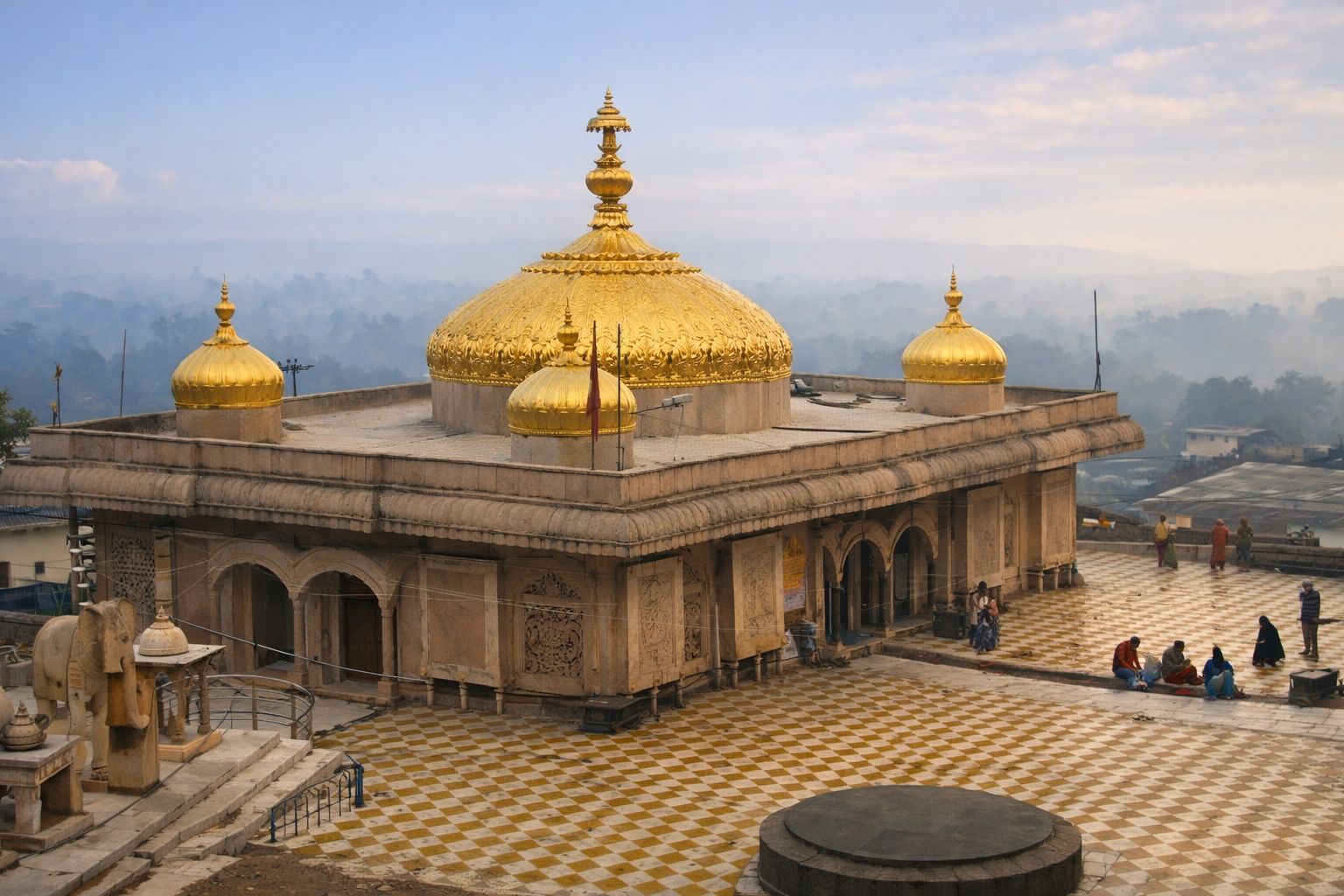
The Jwalamukhi Temple in Kangra district, Himachal Pradesh, is one of the most mysterious and powerful shrines of Goddess Shakti. Revered as one of the 18 Maha Shakti Peethas, this sacred temple is famous for its eternal flames that emerge naturally from the earth—burning continuously without any fuel.
Jwalamukhi is a living symbol of divine energy, where the Goddess manifests not in an idol, but as ever-burning fire, representing pure cosmic power.
Jwalamukhi as a Maha Shakti Peetha
According to ancient Shakti Peetha traditions, after Devi Sati’s self-immolation, Lord Vishnu dismembered her body to restore cosmic balance. It is believed that the tongue (Jihva) of Devi Sati fell at this sacred site, establishing it as the Jwalamukhi Shakti Peetha.
Here, the Goddess is worshipped as Jwalamukhi, the flame-mouthed form of Shakti, symbolizing energy, speech, and divine expression.
Meaning and Spiritual Significance of “Jwalamukhi”
The name Jwalamukhi comes from Sanskrit:
- Jwala – Flame
- Mukhi – Mouth or face
Jwalamukhi means “the Goddess whose mouth emits fire.” Spiritually, the flame represents knowledge that burns ignorance and purifies the soul.
Unique Features of Jwalamukhi Temple
- Natural flames emerge from rock fissures inside the sanctum.
- No idol is worshipped; the flames themselves are the deity.
- The temple has been revered by sages, kings, and emperors, including Mughal ruler Akbar.
- The shrine is closely associated with Tantric and Shakta traditions.
The continuous flames are seen as proof of the Goddess’s eternal presence.
Legend of Akbar and Jwalamukhi
According to legend, Emperor Akbar tried to extinguish the sacred flames by pouring water over them, but failed. Awed by the divine power, he offered a golden umbrella to the Goddess, which later turned into a copper replica—symbolizing humility before divine will.
This story highlights the temple’s spiritual authority beyond religious boundaries.
Spiritual Importance and Devotee Beliefs
Devotees visit Jwalamukhi Temple to seek:
- Removal of negative energies
- Fulfillment of wishes
- Protection from fear and obstacles
- Inner purification and strength
It is believed that sincere prayers offered before the sacred flames are quickly answered.
Festivals and Celebrations
Major festivals celebrated at Jwalamukhi include:
- Navaratri (especially Chaitra and Sharad Navaratri)
- Makar Sankranti
- Diwali
During Navaratri, the temple glows with lamps, chants, and intense devotion.
Visiting Jwalamukhi Temple, Kangra
Location: Kangra District, Himachal Pradesh
Nearest Town: Dharamshala
Best Time to Visit: March to October
Temple Timings: Morning to evening
The temple is well connected by road, with the nearest railhead at Pathankot.
Importance of Jwalamukhi Among Shakti Peethas
Among the 18 Maha Shakti Peethas, Jwalamukhi stands unique as a shrine where Shakti is worshipped as pure energy rather than form. The ever-burning flames remind devotees that divine power is eternal and indestructible.
Conclusion
Goddess Jwalamukhi embodies the unstoppable force of divine energy. A visit to this sacred Shakti Peetha is believed to ignite spiritual awareness, burn away impurities, and strengthen faith.
Standing before the eternal flames, devotees experience a profound truth—that Shakti is alive, luminous, and ever-present.
May Goddess Jwalamukhi bless you with clarity, courage, and divine protection. 🔥