

Vaishno Devi
About Vaishno Devi Temple
- One of India’s most revered Shakti shrines
Mata Vaishno Devi Temple is situated at an altitude of about 5,200 feet in the Trikuta Hills of Jammu and Kashmir. Dedicated to Goddess Vaishnavi, the shrine is visited by millions of devotees each year who believe the yatra fulfills wishes and brings spiritual peace. The pilgrimage starts from Katra and includes a sacred trek through the Trikuta Hills, making the journey itself a deeply spiritual experience.
Spiritual Significance of Maa Vaishno Devi
The temple represents the combined divine energies of Maha Kali, Maha Lakshmi, and Maha Saraswati. Inside the sacred cave, devotees worship three pindis symbolizing these powers. The pilgrimage is considered incomplete without visiting Bhairavnath Temple.
Yatra Route & Trek Guide
Trek Information
- Base camp: Katra
- Trek distance: 14 km
- Trek options:
- Walking
- Pony / Palki
- Battery Car
- Helicopter (Katra–Sanjichhat)
Important Route Points
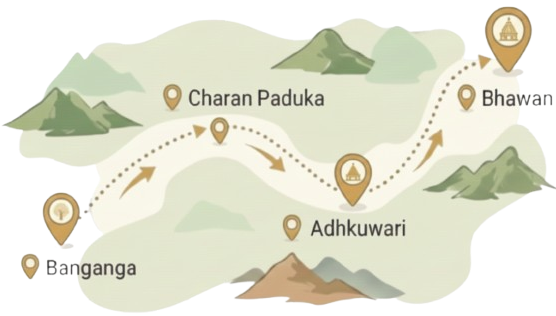
How to Reach
By Train
Nearest railway station – Katra
By Air
Nearest airport – Jammu Airport
By Road
Connected from Jammu & nearby cities
Darshan Timings & Best Time to Visit
- Temple is open 24×7
- Peak season: March–October
- Best months: March–June & September–October
- Avoid heavy rush during Navratri unless planned
Yatra Registration & Important Guidelines
- Mandatory registration at Katra or online
- Carry valid ID proof
- Follow shrine board instructions
- No alcohol or non-vegetarian food allowed
FAQs
For most pilgrims, the yatra takes 6 to 9 hours one way from Katra, depending on walking speed, weather, and crowd conditions. Many devotees complete darshan and return within 1–2 days.
Yes. Yatra registration is mandatory for all pilgrims and can be done online or at registration counters in Katra. Without a valid yatra slip, pilgrims are not allowed to proceed.
The yatra involves a 13 km uphill trek, which can be tiring for elderly devotees. However, facilities like battery cars, ponies, palkis, and helicopter services make it manageable for senior citizens.
Yes. Night trekking is allowed, and the route remains well-lit and monitored. Many devotees prefer night hours to avoid daytime crowds and heat.
The best time is March to June and September to October, when weather conditions are comfortable. The temple is open year-round, but heavy crowds are common during Navratri and summer holidays.