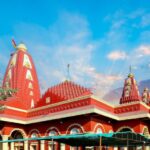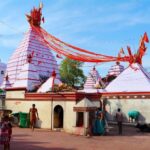
Nestled atop the scenic Nilachal Hills in Guwahati, Assam, the Kamakhya Devi Temple is one of the most revered and mysterious spiritual destinations in India. Overlooking the majestic Brahmaputra River, this ancient temple is not just a place of worship; it is the spiritual heart of Northeast India and the ultimate epicenter of Tantric Shaktism.
As the oldest and most prominent among the 51 sacred Shakti Peethas, the temple celebrates the divine feminine power, creation, and fertility.
Whether you are a devout pilgrim, a spiritual seeker, or a curious traveler exploring the beauty of Assam, this complete travel guide will help you plan a seamless and divine journey to the Kamakhya Temple.
🛕 Kamakhya Temple: Quick Facts & Overview
| Aspect | Details |
|---|---|
| Primary Deity | Maa Kamakhya (An incarnation of Goddess Shakti) |
| Location | Nilachal Hills, Guwahati, Assam, India |
| Coordinates | $26.166426^\circ \text{N}, 91.705509^\circ \text{E}$ |
| Key Significance | Womb/Yoni of Goddess Sati (Primary Shakti Peeth) |
| Timings | 5:30 AM to 5:15 PM (Breaks from 1:00 PM to 2:30 PM) |
| Entry Fee | Free (General Queue) | VIP Darshan: ₹501 per person |
| Best Time to Visit | October to March (Pleasant weather) |
| Major Festival | Ambubachi Mela (June) & Durga Puja (September/October) |
📜 The Sacred Legend Behind Kamakhya Temple
The origin of the Kamakhya Temple is deeply rooted in Hindu mythology and the legendary story of Goddess Sati and Lord Shiva.
According to the Kalika Purana and Devi Bhagavata Purana, King Daksha (the father of Sati) organized a grand Yajna (sacred fire ritual) but intentionally did not invite Lord Shiva and Sati. Despite Shiva’s warnings, Sati attended the ritual, where her father insulted Shiva repeatedly. Unable to bear the humiliation of her husband, Sati self-immolated by jumping into the Yajna fire.
Grief-stricken and filled with rage, Lord Shiva carried Sati’s body on his shoulders and performed the Tandava (the dance of cosmic destruction). To restore balance to the universe, Lord Vishnu used his Sudarshan Chakra to dissect Sati’s body into 51 pieces.
These body parts fell across the Indian subcontinent, establishing the 51 Shakti Peethas. It is believed that Sati’s womb and yoni (genitals) fell atop the Nilachal Hill, making Kamakhya the most powerful shrine for cultivating divine energy.
🌸 Spiritual Significance: The “Bleeding Goddess”
Unlike most Hindu temples, there is no clay or stone idol of Goddess Kamakhya in the inner sanctum. Instead, devotees worship a natural, yoni-shaped stone fissure in a dark underground cave. A natural spring flows continuously over this stone, keeping it perpetually moist.
The Mystery of the Ambubachi Mela
Kamakhya Devi is also famously known as the “Bleeding Goddess.” Every year in the Hindu month of Ashaadha (typically mid-June), the temple observes the Ambubachi Mela, celebrating the annual menstruation cycle of the Goddess.
During these three days:
- The Temple remains closed to all devotees.
- It is believed that the waters of the nearby Brahmaputra River turn red due to the creative power of the goddess.
- On the fourth day, the temple doors reopen with grand celebrations. Devotees are distributed Angodak (holy spring water) and Angavastra (the sacred red cloth used to cover the stone during her cycle) as highly auspicious blessings.
🕰️ Kamakhya Temple Timings & Daily Rituals
To experience a peaceful darshan, it is essential to align your visit with the temple’s daily rituals.
Daily Schedule:
- 5:30 AM: Snana (sacred bathing) of the Pithasthana.
- 6:00 AM: Nitya Puja (morning prayers).
- 8:00 AM: Temple doors open for general devotees.
- 1:00 PM to 2:30 PM: Temple doors close for cooked offerings (Bhog) to the deity.
- 2:30 PM: Temple doors reopen for afternoon darshan.
- 5:15 PM: Main temple doors close for the night (sunset).
- 7:30 PM: Evening Aarti.
Note: During special festivals like Saradiya Durga Puja or Ambubachi Mela, the opening timings can vary, and waiting times can increase significantly.
🎟️ Darshan Options: Free vs. VIP Pass
If you are planning your visit, you have two options to enter the Garbhagriha (inner sanctum):
- General/Free Queue: You do not need to pay anything, but the wait times can range from 3 to 6 hours depending on the crowd. It is recommended to arrive by 4:00 AM to secure an early spot.
- VIP Darshan Ticket (₹501): You can purchase a VIP ticket directly at the temple counter or book online in advance via the official temple portal (maakamakhya.org). This reduces your wait time to about 1 to 2 hours.
🗺️ How to Reach Kamakhya Devi Temple
Located in the major city of Guwahati, the temple is extremely well-connected by all modes of transport.
✈️ By Air
The nearest airport is the Lokpriya Gopinath Bordoloi International Airport (GAU) in Guwahati, located approximately 20 km away from the temple. From the airport, you can easily hire a prepaid taxi, an app-based cab (Uber/Ola), or take a local bus to Nilachal Hills.
🚆 By Rail
- Kamakhya Junction (KYQ): The closest railway station, situated just 7 km from the temple base.
- Guwahati Railway Station (GHY): Located about 8 km away, this is the main rail hub of Northeast India with excellent connectivity to major Indian cities.
- Shared cabs, auto-rickshaws, and local buses run frequently from both stations to the foothill of the temple.
🚗 By Road
Guwahati is connected via NH 27 and NH 17. Once you reach the foothill of Nilachal Hill, you can:
- Take a shared jeep or local van directly to the temple entrance gate.
- Drive up your personal/rental vehicle (ample parking is available).
- Walk up the historic stone steps (Mekhela Ujowa Path), which takes about 30–40 minutes of climbing.
💡 Important Travel Tips for First-Time Pilgrims
- Dress Code: Wear modest, traditional Indian attire. Men are encouraged to wear dhotis, kurtas, or full pants. Women should wear sarees, salwar kameez, or traditional suits. Avoid shorts, sleeveless tops, and leather accessories.
- Mobile & Cameras: Photography is strictly prohibited inside the inner sanctum (Garbhagriha) to maintain its sacredness. You can, however, take photos of the beautiful temple exterior and the surrounding hills.
- Explore the Complex: Don’t miss out on the smaller shrines dedicated to the other 9 Mahavidyas (such as Tara, Kali, Bhuvaneshwari, and Chhinnamasta) located around the main temple complex.
- Plan a Ferry Ride: After your temple visit, take a short ferry ride to the Umananda Temple, located on the smallest inhabited river island in the middle of the Brahmaputra River!
🌸 Experience the Divine Grace of Maa Kamakhya
A pilgrimage to Kamakhya Devi Temple is more than just sightseeing; it is an unforgettable spiritual journey that connects you with ancient Tantric heritage and the supreme energy of creation. As you step out onto the terrace overlooking the sweeping Brahmaputra valley, the serene mountain breeze and the scent of incense will leave you with a profound sense of peace.
Are you planning a trip to Assam? Let us help you organize your ultimate spiritual trail! Leave your questions in the comments below, or check out our other guides to Somnath Jyotirling and India’s sacred Char Dham.