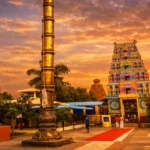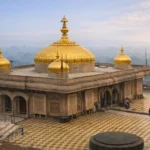
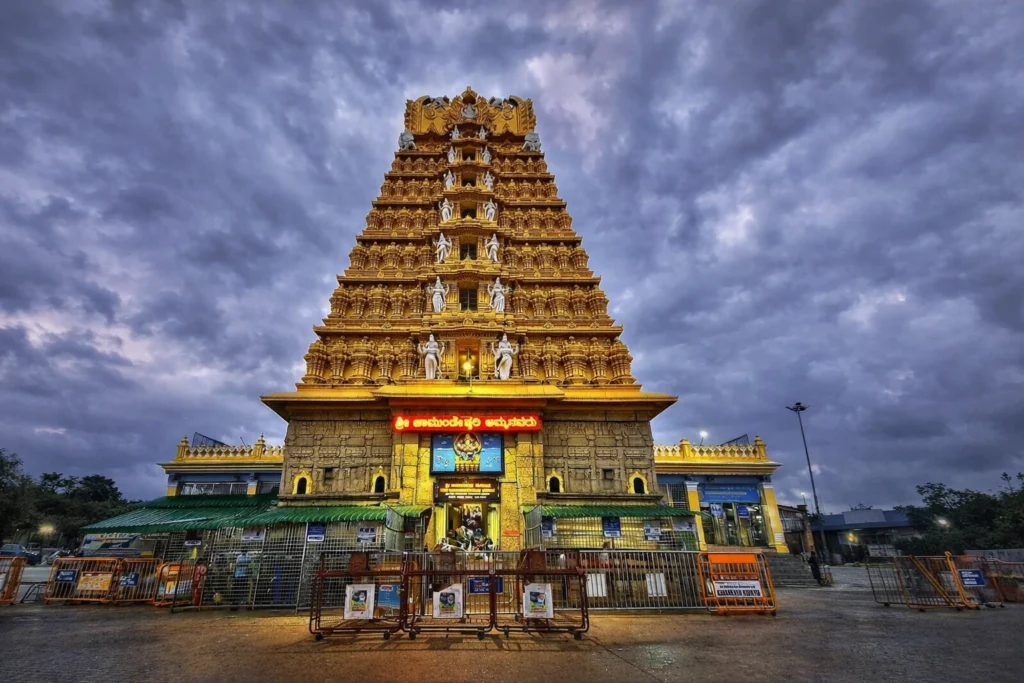
Set against the majestic, snow-capped backdrop of the Dhauladhar mountain range in the Kangra district of Himachal Pradesh, the Shri Chamunda Devi Temple is one of the most prominent and spiritually charged shrines in Northern India. Situated peacefully on the banks of the rushing Baner River at an altitude of approximately $1000 \text{ meters}$ above sea level, this sacred site is also famously referred to as Chamunda Nandikeshwar Dham.
This beautiful temple represents the divine union of both Shiva and Shakti. It is dedicated to Goddess Chamunda (a fierce, protective manifestation of Goddess Durga) and Lord Shiva (residing here as Nandikeshwar).
Whether you are embarking on the sacred Nau Devi Yatra (nine devi pilgrimage) across Himachal, seeking blessings from the motherly destroyer of evil, or traveling through the scenic landscapes near Dharamshala, this comprehensive guide has all the details you need for your trip.
🛕 Chamunda Devi Temple: Quick Facts & Overview
| Aspect | Details |
|---|---|
| Primary Deity | Goddess Chamunda (Durga) & Lord Nandikeshwar (Shiva) |
| Location | Padar (Dadh) Village, Kangra District, Himachal Pradesh, India |
| Coordinates | $32.1487^\circ \text{N}, 76.4189^\circ \text{E}$ |
| Key Significance | Abode of the slayer of demons Chanda & Munda; Shiva-Shakti union |
| Temple Altitude | $1000 \text{ meters}$ ($3280 \text{ feet}$) above sea level |
| Timings (Summers) | 5:00 AM to 10:00 PM |
| Timings (Winters) | 6:00 AM to 9:00 PM |
| Entry Fee | Free |
| Best Time to Visit | March to October (Pleasant mountain weather) |
| Major Festivals | Chaitra & Ashwin Navratras (Huge celebrations) |
📜 The Sacred Legends of Chamunda Devi
The temple’s origins and name are deeply tied to the cosmic battles described in ancient Hindu scriptures, particularly the Markandeya Purana and the Devi Mahatmyam.
1. The Slaying of Chanda and Munda
According to mythological legends, two powerful demon generals named Chanda and Munda (sent by the demon kings Shumbha and Nisumbha) attempted to terrorize the gods and conquer the earth.
To protect the universe, Goddess Parvati contracted her eyebrows, and from her forehead emerged a terrifying, dark-complexioned goddess carrying a sword and a noose—an avatar of ultimate wrath. In a fierce and legendary battle, this goddess decapitated both Chanda and Munda. Upon defeating them, Goddess Kaushiki (Durga) declared that she would be worshipped eternally by combining the names of the two vanquished demons: Chamunda.
2. The Shifted Temple & the Priest’s Dream
The current, easily accessible temple was constructed approximately 400 years ago (around the 16th or 17th century). Originally, the ancient shrine was located far uphill in a highly inaccessible, snowy peak of the Dhauladhar range—known today as Aadi Himani Chamunda.
Because older and disabled pilgrims could not make the arduous trek, a devoted local priest and the ruling King of Kangra prayed to the Goddess for permission to relocate her image to the valley. The Goddess appeared in the priest’s dream, giving her consent and directing him to the exact spot in the Baner River where a sacred hidden idol lay. The king’s men recovered the holy Pindi at that exact spot and established the temple where it proudly stands today.
🏔️ Inside Chamunda Nandikeshwar Dham
The temple complex is not just a single building; it is a sprawling spiritual experience with unique features:
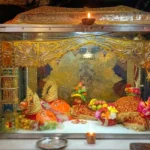
- The Main Shrine: The inner sanctum houses the powerful deity of Maa Chamunda, decorated with floral and animal carvings on delicate silver sheets. The goddess is flanked by the protective icons of Lord Hanuman and Lord Bhairav.
- The Nandikeshwar Cave: Tucked directly behind the main temple is a natural, cave-like stone structure. Inside this cool, rocky cave resides a self-manifested Shiva Lingam representing Lord Nandikeshwar. Devotees traditionally bow here after visiting the main goddess to complete their prayers.
- The Holy Bathing Ghat (Kund): A beautiful, clean pool filled with pure mountain spring water sits in the temple courtyard. Sculptures of various deities, including a large statue of Lord Shiva sitting in meditation and Goddess Saraswati, rise gracefully from the water.
- Handicrafts & Souvenirs: The temple complex features a local handicraft center where tourists can browse traditional Kangra toys, wooden carvings, local honey, and world-famous Kangra Tea.
🕰️ Daily Schedule & Ritual Timings
The divine atmosphere of Chamunda Devi is most magical during the rhythmic sound of bells and the chanting of prayers.
- 5:00 AM (Summers) / 6:00 AM (Winters): Temple Gates Open.
- 8:00 AM: Morning Mangal Aarti (Gates remain briefly closed for darshan during the ritual).
- 12:00 PM to 1:00 PM: Midday Pujas and Bhog offering (gates restricted).
- 6:00 PM (Winters) / 8:00 PM (Summers): Evening Sandhya Aarti.
- 10:00 PM (Summers) / 9:00 PM (Winters): Temple Gates close.
🗺️ How to Reach Chamunda Devi Temple
Chamunda Devi is situated along the main state highway (SH 17) connecting Dharamshala and Palampur, making transportation very convenient.
🚗 By Road (Most Popular)
The temple is beautifully connected to major tourist towns in Himachal Pradesh:
- From Dharamshala / McLeod Ganj: Only 15 km away (approx. 30–40 minutes drive). Regular local buses, shared autos, and taxis run constantly.
- From Palampur: Roughly 19 km away.
- From Kangra Town: About 22 km away.
- From New Delhi: Approximately $490 \text{ km}$ via NH 503 (approx. 9–10 hours drive). Many overnight luxury Volvo buses connect Delhi directly to Dharamshala.
🚆 By Train
- Kangra Railway Station (Narrow-Gauge): Located 14 km away. This station is part of the scenic, historic Kangra Valley Toy Train network.
- Pathankot Junction (Broad-Gauge): The primary railway terminal for long-distance trains, located roughly 90 km away. You can easily hire a direct taxi or board a state transport bus from Pathankot directly to the temple base.
✈️ By Air
- Kangra Airport, Gaggal (DHM): Located just 25 km away. There are regular daily flights operating from New Delhi and Chandigarh. Taxis are readily available at the airport arrivals gate.
💡 Essential Tips for First-Time Visitors
- Combine Your Visit: Because of its prime location, you can easily combine your pilgrimage with a visit to the historic Kangra Fort, the breathtaking McLeod Ganj Monasteries, or the roaring waterfalls of Palampur.
- Footwear Deposit: Safe, free footwear counters are managed near the main entry gates of the temple complex.
- Aadi Himani Chamunda Trek: If you are physically fit and love adventure, you can attempt the steep 16 km trek up from the base to visit the original, ancient hilltop temple of Aadi Himani Chamunda. The trek offers spectacular, unmatched views of the Himalayan valleys.
🌸 Continue Your Himalayan Temple Journey
Standing on the banks of the Baner River, hearing the rushing mountain waters blend with the resonant ringing of temple bells, you can truly feel the powerful energy of Chamunda Nandikeshwar Dham. It is a place that washes away mental stress and fills you with immense courage and peace.
Are you planning to explore more of Himachal’s legendary Devi shrines? Read our complete, hand-curated guides to the sacred Mata Chintpurni Devi Temple and the majestic hilltop Shree Naina Devi Ji Temple!