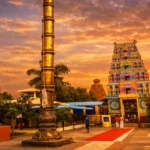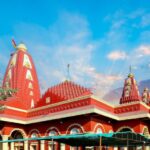
Stretching beautifully along the eastern banks of the sacred Hooghly River (a key tributary of the holy Ganges) in the northern suburbs of Kolkata, West Bengal, the Dakshineswar Kali Temple is one of the most famous, architecturally brilliant, and spiritually magnetic temples in India.
Dedicated to Goddess Kali in her highly compassionate form of Bhavatarini (literally meaning “She who liberates her devotees from the ocean of existence”), this massive temple complex spans over $20 \text{ acres}$ of serene, riverfront land.
Founded in the mid-19th century, this iconic site is universally celebrated not only as a masterpiece of Bengal’s traditional architecture but also as the sacred spiritual laboratory where the legendary mystic Sri Ramakrishna Paramahansa lived, meditated, and attained divine enlightenment.
Whether you are looking to absorb the profound spiritual energy of the temple, trace the footsteps of Swami Vivekananda’s guru, or watch a golden sunset over the Hooghly River from the temple ghats, this ultimate guide covers everything you need to know.
🛕 Dakshineswar Kali Temple: Quick Facts & Overview
| Aspect | Details |
|---|---|
| Primary Deity | Maa Bhavatarini (An incarnation of Goddess Dakshina Kali) |
| Location | Dakshineswar, Kolkata, West Bengal, India |
| Coordinates | $22.6551^\circ \text{N}, 88.3578^\circ \text{E}$ |
| Key Founder | Rani Rashmoni (Installed on Snana Yatra day in 1855) |
| Temple Altitude | $11 \text{ meters}$ ($36 \text{ feet}$) above sea level |
| Architectural Style | Bengal’s classic Navaratna (Nine-spires) style |
| Timings (Summers) | 6:00 AM to 12:30 PM & 3:30 PM to 9:00 PM |
| Timings (Winters) | 6:00 AM to 12:30 PM & 3:00 PM to 8:30 PM |
| Entry Fee | Free |
| Best Time to Visit | October to March (Pleasant climate & Kali Puja/Diwali celebrations) |
| Major Festivals | Kali Puja, Snana Yatra, Kalpataru Day (January 1st) |
📜 The Sacred History & Vision of Rani Rashmoni
The story behind the creation of the Dakshineswar Temple is a testament to unwavering devotion and social reform.
1. The Divine Vision on the Ganges
In the year 1847, a wealthy, deeply benevolent, and exceptionally broad-minded widow zamindar named Rani Rashmoni planned a grand pilgrimage to the holy city of Kashi (Varanasi) to express her devotion to the Divine Mother. Because travel in those days was difficult, she prepared twenty-four large boats filled with food, supplies, relatives, and servants.
The night before the massive flotilla was to set sail, Goddess Kali appeared in Rani Rashmoni’s dream. The Mother Goddess spoke directly to her:
“There is no need to go to Kashi. Construct a beautiful temple for me on the banks of the Ganges River itself, install my image there, and arrange for my worship. I shall manifest myself in that image and accept your devotion right there.”
Profoundly moved, Rani immediately cancelled her pilgrimage and purchased a vast, tortoise-shaped plot of land in the riverfront village of Dakshineswar. The construction began in 1847 and took eight years to complete, costing over nine hundred thousand rupees.
2. The Great Inauguration (1855)
The holy image of Goddess Kali was successfully installed on May 31, 1855 (the auspicious day of Snana Yatra), amidst grand celebrations attended by over one lakh scholars and priests. Rani Rashmoni famously insisted that the temple doors remain open to all human beings, completely free of any barriers based on caste, gender, or social background.
👁️ The Mystical Dakshina Kali Form of Maa Bhavatarini
The main shrine (Garbhagriha) of the temple houses the breathtaking, unique idol of Goddess Bhavatarini:
- The Stance: This form is widely revered as Dakshina Kali because she stands with her right foot forward on the chest of a supine, peaceful Lord Shiva. In the Tantric tradition, Shiva represents pure, inactive consciousness, while Kali represents active spiritual energy (Prakriti).
- The Throne: Both deities are placed elegantly on a magnificent, thousand-petaled lotus throne crafted entirely from pure silver.
- The Appearance: Maa Bhavatarini is sculpted from a single block of dark basalt touchstone, adorned with gold ornaments, silk sarees, and fresh red hibiscus flower garlands.
🏔️ Inside the Dakshineswar Temple Complex
The temple layout is beautifully structured, keeping spiritual symbolism in mind:
1. The Nine-Spired Main Temple (Navaratna)
The grand three-storeyed temple stands on a raised high platform with a majestic flight of stairs. It measures $14 \text{ meters}$ square at the base and rises over $30 \text{ meters}$ ($100 \text{ feet}$) high. It is topped with nine artistically grooved spires (Navaratna) that gleam under the sun.
2. The Twelve Shiva Temples (Aat-Chala)
Lining the beautiful Hooghly riverfront are twelve identical mini Shiva temples standing in a perfect row. Built in Bengal’s traditional Aat-Chala (eight-roofed) architectural style, they house twelve black stone Shiva Lingams, constructed specifically to represent the twelve sacred Jyotirlingas of India.
3. The Room of Sri Ramakrishna
To the northwest corner of the courtyard lies the small, simple room where Sri Ramakrishna Paramahansa lived for fourteen years. Devotees can still view the wooden beds where he sat, and experience the quiet, mystical atmosphere where he attained high states of spiritual ecstasies (Samadhi).
4. Other Shrines
- Radha Kanta Temple: A beautiful shrine located northeast of the main complex dedicated to the divine forms of Radha and Lord Krishna.
- The Nahabat (Music Tower): The place where Sri Ramakrishna’s wife and spiritual companion, Holy Mother Sarada Devi, lived, cooked, and carried out her daily worship.
🕰️ Daily Schedule & Ritual Timings
To experience the divine energy and the legendary evening aarti, align your visit with the seasonal schedules:
☀️ Summer Schedule (April to September):
- 6:00 AM to 12:30 PM: Morning Darshan & worship.
- 12:30 PM to 3:30 PM: Temple gates close for bhog offerings and resting of the deity.
- 3:30 PM to 9:00 PM: Afternoon and evening darshan.
- 7:00 PM: Evening Sandhya Aarti (A deeply atmospheric and mesmerizing event).
❄️ Winter Schedule (October to March):
- 6:00 AM to 12:30 PM: Morning Darshan.
- 12:30 PM to 3:00 PM: Temple gates close for afternoon bhog.
- 3:00 PM to 8:30 PM: Reopens for evening darshan.
- 6:30 PM: Evening Sandhya Aarti.
🗺️ How to Reach Dakshineswar Kali Temple
Dakshineswar is a major transportation hub located about $13 \text{ km}$ north of Kolkata city center, making it extremely easy to access:
🚇 By Metro (Fastest & Easiest)
- Dakshineswar Metro Station (Blue Line): This is the ultimate, stress-free way to reach the temple. The metro station is located directly opposite the temple gateway. A modern, fully covered skywalk lined with clean souvenir shops connects the metro exit directly to the temple entrance gate!
🚆 By Train
- Dakshineswar Railway Station: Located at a walking distance from the temple, with frequent local trains running from Sealdah Junction and Howrah Junction.
✈️ By Air
- Netaji Subhash Chandra Bose International Airport (CCU): Located just
$13 \text{ km}$away. You can easily book a prepaid airport taxi or app cab directly to the temple.
💡 Essential Tips for First-Time Visitors
- Avoid Mobile Phones & Cameras: Carrying mobile phones, tablets, and cameras inside the main temple courtyard is strictly prohibited. You must deposit them at the free security lockers near the entrance gates.
- Take a Holy Dip: The temple ghats are exceptionally clean. Many pilgrims prefer to take a holy dip in the Ganges before entering the main courtyard.
- Combine with Belur Math: You can board a scenic, low-cost local ferry boat from the Dakshineswar ghat directly across the river to Belur Math (the global headquarters of the Ramakrishna Mission). The ferry ride is peaceful and takes only
$15 \text{ minutes}$. - Dress Code: Wear respectful, modest traditional clothing. Ensure your shoulders and knees are fully covered.
🌸 Step into the Peace of Dakshineswar
Standing at the edge of the Hooghly River, looking back at the red-brick spires of the Dakshineswar temple while hearing the echoes of “Maa” sung inside the courtyard, brings an overwhelming sense of cosmic energy. It is an essential spiritual pilgrimage that leaves your soul deeply rejuvenated.
Are you preparing to discover more powerful temples in West Bengal and beyond? Check out our ultimate hand-curated guides to the ancient Kalighat Kali Temple and the legendary, wish-fulfilling Mansa Devi Temple in Haridwar!