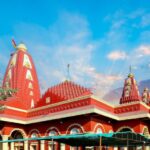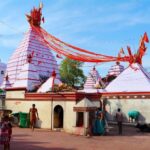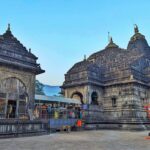
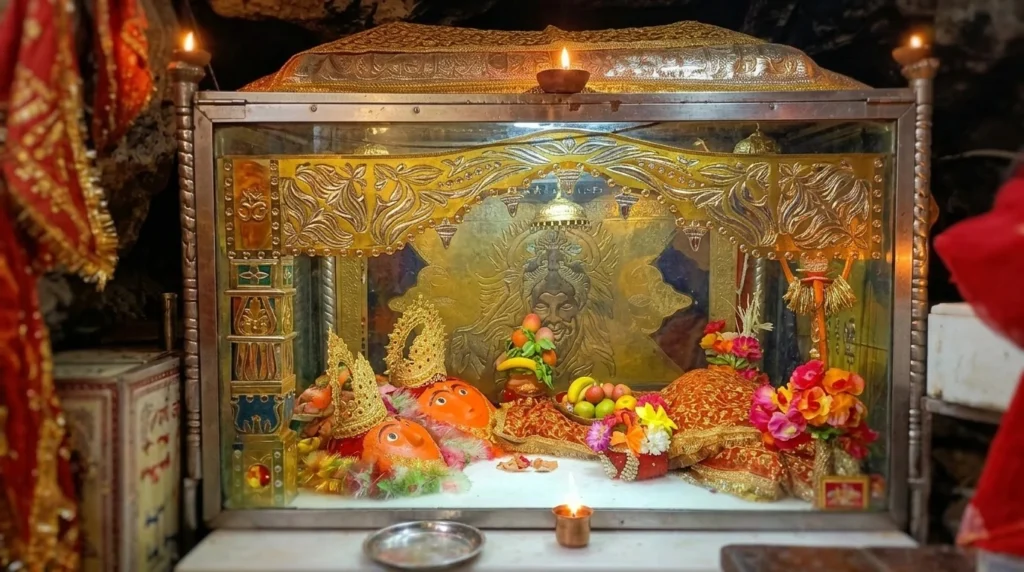
Tucked away in the rugged, wind-carved desert gorges of the Hingol National Park in the Lasbela district of Balochistan, Pakistan, the Hinglaj Mata Temple is one of the most mysterious, ancient, and spiritually powerful shrines in South Asia. Located approximately $250 \text{ km}$ ($155 \text{ miles}$) west of Karachi, this desert cave temple rests along the west bank of the rushing Hingol River, near the Makran Coastal Range and just $20 \text{ km}$ inland from the Arabian Sea.
Often referred to in sacred scriptures as Marutirtha Hinglaj (meaning “Hinglaj, the Shrine of the Desert”), it is widely celebrated as the supreme and first of the major $51$ Shakti Peethas.
Unlike traditional temple structures, the Hinglaj Mata Temple features no grand marble domes or human-made spires. Instead, it is housed inside a massive, natural mountain cavern, where the Goddess is worshipped in her natural form. This site is also a unique symbol of interfaith harmony, deeply revered by local Muslims who affectionately refer to it as Nani Mandir (shrine of the Lady Grandmother).
Whether you are tracing the historic paths of the grand Hinglaj Yatra, exploring the ancient legends of the Ramayana, or fascinated by the natural wonder of mainland Asia’s largest mud volcanoes, this comprehensive guide offers everything you need to know.
🛕 Hinglaj Mata Temple: Quick Facts & Overview
| Aspect | Details |
|---|---|
| Primary Deity | Goddess Hinglaj Devi (Also known as Kottari / Bibi Nani) |
| Location | Hingol National Park, Lasbela District, Balochistan, Pakistan |
| Coordinates | $25.0861^\circ \text{N}, 65.5153^\circ \text{E}$ |
| Key Significance | The crown of the head (Brahmarandhra) of Goddess Sati |
| Associated Bhairav | Bhimalochana (Located historically at Koteshwar, Kutch) |
| Temple Altitude | Approximately $120 \text{ meters}$ ($393 \text{ feet}$) above sea level |
| Entry Requirements | Valid Pakistani Visa & NOC (for international/Indian passport holders) |
| Best Time to Visit | November to March (Mild winter weather) & during the April Yatra |
| Major Festival | Grand Hinglaj Yatra (Four-day festival in April) |
📜 The Sacred Legends of Hinglaj Mata
The history of Hinglaj Mata is steeped in ancient Puranic lore and epics, making it one of the most culturally resilient sites of pilgrimage.
1. The Fall of Sati’s Head (Brahmarandhra)
According to the ancient Devi Bhagavata Purana and the Tantrachudamani, when Lord Vishnu used his Sudarshan Chakra to dismember the lifeless body of Goddess Sati to calm Lord Shiva’s cosmic dance of destruction (Tandava), the crown of her head (Brahmarandhra) fell in the desert cave of Hinglaj. Since the crown represents the highest chakra of spiritual enlightenment, Hinglaj is considered the supreme source of cosmic energy among the $51$ Shakti Peethas.
2. The Slaying of Demon Hingol
Local mythology details that the region was once ruled by a powerful, tyrannical demon king named Hingol. He tormented the local populations and prohibited the worship of the divine.
To save the universe, Goddess Durga chased him into the deep gorges of Balochistan. She eventually cornered him inside the rocky mountain cavern. Before being slain by the Goddess, Hingol made a final request: he begged that the sacred cave and the surrounding river forever bear his name. The compassionate Mother granted his wish, naming the site Hinglaj and the river Hingol.
3. Lord Rama’s Pilgrimage of Purification
According to the Ramayana, after defeating the demon king Ravana in Lanka, Lord Rama sought to cleanse himself of the sin of Brahmahatya (killing a highly learned Brahmin, as Ravana was the son of Sage Vishrava).
On the advice of the sages, Lord Rama, together with Sita, Lakshmana, and Hanuman, undertook the arduous barefoot pilgrimage through the Makran desert to Hinglaj Mata. After completing his penance, the Goddess blessed him and purified his soul. To mark his successful pilgrimage, Lord Rama carved symbols of the Sun and Moon on the mountain face opposite the cave, which remain faintly visible to this day.
🌋 Baba Chandragup: The Sacred Mud Volcano
A non-negotiable and deeply spiritual ritual of the Hinglaj Yatra is paying homage to Baba Chandragup, located just a few kilometers off the Makran Coastal Highway before reaching the main temple.
Baba Chandragup is mainland Asia’s largest active mud volcano, rising dramatically from the desert plains. It is considered the sacred abode of the demigod Babhaknath.
- The Penance: Pilgrims must climb the hundreds of steep, sandy steps to the rim of the active mud crater. The climb is physically challenging and serves as a penance.
- The Offerings: At the rim, pilgrims prepare special unleavened bread (Rotis) made of flour, jaggery, and pure ghee. Devotees ensure the ingredients never touch the ground during preparation.
- The Confession & Forgiveness: Standing before the bubbling mud crater, pilgrims throw their Rotis, coconuts, and rose petals into the crater. Crucially, each pilgrim must openly confess their sins and ask for forgiveness. It is believed that the bubbling mud levels rise or drop as a divine sign of acceptance. Only after receiving “permission” from Baba Chandragup can the pilgrims proceed to the final cave temple of Hinglaj.
👁️ Inside the Natural Cave Temple
The temple complex is located in a narrow, dry river valley enclosed by steep sandstone cliffs.
- No Made Idol: Inside the small, dark cave chamber, there is no traditional stone or metal idol. Instead, the Goddess is represented by a natural, low-lying mud altar (Pindi) coated with red vermilion (Sindoor).
- The Holy Bath (Khari Nadi): Before entering the cave, pilgrims traditionally bathe in the nearby Khari Nadi (Hingol River) to purify themselves.
- Interfaith Harmony: Local Baloch and Sindhi Sufi Muslims actively participate in the management of the shrine. They refer to the Goddess as Bibi Nani (representing the ancient Mesopotamian goddess Nanaia or a grandmotherly figure of protection) and accompany Hindu pilgrims, ensuring their safety and comfort.
🗺️ How to Reach Hinglaj Mata Temple
Due to the construction of the modern Makran Coastal Highway, which connects Karachi to the port city of Gwadar, reaching Hinglaj is now much safer and more convenient than in previous decades.
🚗 From Karachi (The Gateway)
- By Road: The temple is approximately $250 \text{ km}$ ($155 \text{ miles}$) away from Karachi. The drive takes around $3.5 \text{ to } 4 \text{ hours}$ along the scenic Coastal Highway, which passes through coastal sand dunes and spectacular rock formations (including the famous “Princess of Hope” rock monument). Private cars, rental 4WD SUVs, and tour buses are readily available from Karachi.
✈️ By Air
- Jinnah International Airport, Karachi (KHI): This is the nearest airport. Since Balochistan is a sensitive region, international travelers must land in Karachi and arrange for local transport, security clearances, and guides.
💡 Important Travel Tips for Pilgrims
- Obtain NOC & Visa (For Indian & Foreign Nationals): Foreign visitors, especially those holding Indian passports, must obtain a valid Pakistani visa and secure a special No Objection Certificate (NOC) from the Ministry of Interior before traveling to the Balochistan province.
- Travel with a Local Group: It is highly recommended to travel as part of an organized tour group or during the annual Hinglaj Yatra in April. The local organizers handle transport, food, accommodation, and security clearances smoothly.
- Stay Hydrated: The Makran desert is exceptionally hot and arid for most of the year. Carry ample bottled drinking water, sunscreens, and protective clothing.
- Respect the Ecological Zone: The temple lies within the Hingol National Park, which is home to unique desert wildlife, including the Sindh ibex, marsh crocodiles, and desert leopards. Avoid littering and respect the natural habitat.
🌸 The Sacred Crown of Your Shakti Peeth Journey
Standing inside the cool, silent mountain cave of Hinglaj Mata, hearing the echoes of ancient chants bounce off the massive sandstone cliffs of Balochistan, brings a profound feeling of timeless connection. It is a pilgrimage of ultimate devotion, testing a traveler’s physical endurance while rewarding the soul with absolute clarity, strength, and inner peace.
Are you preparing to discover more powerful ancient temples? Check out our ultimate hand-curated guides to the legendary Somnath Jyotirling in Gujarat and the sacred Kamakhya Devi Temple in Assam!